
Results and statistics
UK49s Predictions: What Hot and Cold Numbers Really Tell You
Live hot and cold number counts for UK49s Lunchtime and Teatime, with a plain explanation of why no prediction can beat a random draw.
No UK49s prediction can tell you which numbers will come up today. Every Lunchtime and Teatime draw is random, so each number from 1 to 49 has the same chance in every draw, however often it appeared before. What people call UK49s predictions are statistics of past draws, the hot and cold numbers, and this page shows them live from our results feed with a plain explanation of what they can and cannot tell you.
Number frequency in the last 5 UK49s Lunchtime draws
Counted from the latest draws in our results feed (10 November 2026 to 14 November 2026). It is history only: each draw is random, so a number that came up often is no more likely next time.
- 22 different numbers
- appeared as main numbers in 5 draws
- 37% odd numbers
- of all 30 main numbers drawn
- 130-185 sum range
- lowest and highest total of a draw's main numbers
- 47 highest number seen
- in these draws
Small samples swing a lot: over a handful of draws some numbers repeat by chance and many do not appear at all.
Number frequency in the last 5 UK49s Teatime draws
Counted from the latest draws in our results feed (10 November 2026 to 14 November 2026). It is history only: each draw is random, so a number that came up often is no more likely next time.
- 22 different numbers
- appeared as main numbers in 5 draws
- 47% odd numbers
- of all 30 main numbers drawn
- 148-224 sum range
- lowest and highest total of a draw's main numbers
- 48 highest number seen
- in these draws
Small samples swing a lot: over a handful of draws some numbers repeat by chance and many do not appear at all.
Both counts use the draws currently in our Lunchtime and Teatime feeds, which come from 49's, the official publisher. The latest numbers themselves are on the UK49s Lunchtime results and UK49s Teatime results pages.
UK49s hot and cold numbers: how they are counted
A frequency count is simple. Take a window of past draws, for example the last ten Lunchtime draws, and count how many times each number from 1 to 49 appeared among the main six.
- Hot numbers The numbers that appeared most often in the window.
- Cold numbers The numbers that appeared least, or not at all.
- Overdue numbers The numbers with the longest gap since they last appeared.
The counts above also show a few other descriptions of the window: how many different numbers appeared, the share of odd numbers and the range of the sums of each draw's main numbers. They are all accurate descriptions of the past and all equally useless for the next draw.
Why a small window always looks like a pattern
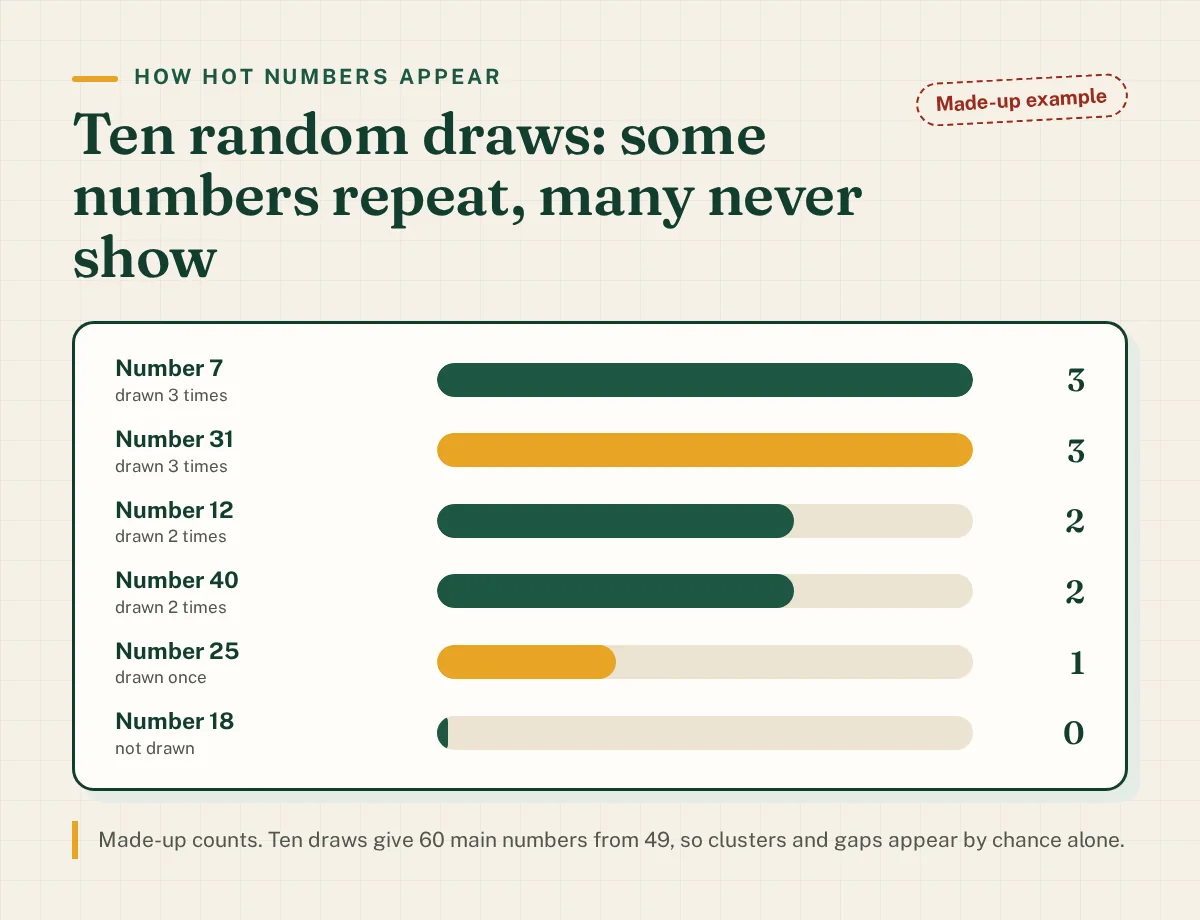
Ten UK49s draws produce 60 main numbers, but there are only 49 different numbers. Even if every number were exactly as likely as every other, which it is, some would turn up two or three times and several would not appear at all. That clustering is what a hot and cold list captures. It is the normal behaviour of a random draw, not a signal.
Change the window and the list changes. The hot numbers of the last ten draws can look nothing like those of the ten before, or of the last hundred. Over a very long run each number tends to appear about equally often; short windows wobble around that average, and the wobble is all a prediction site has to sell.
Why no UK49s prediction improves the odds
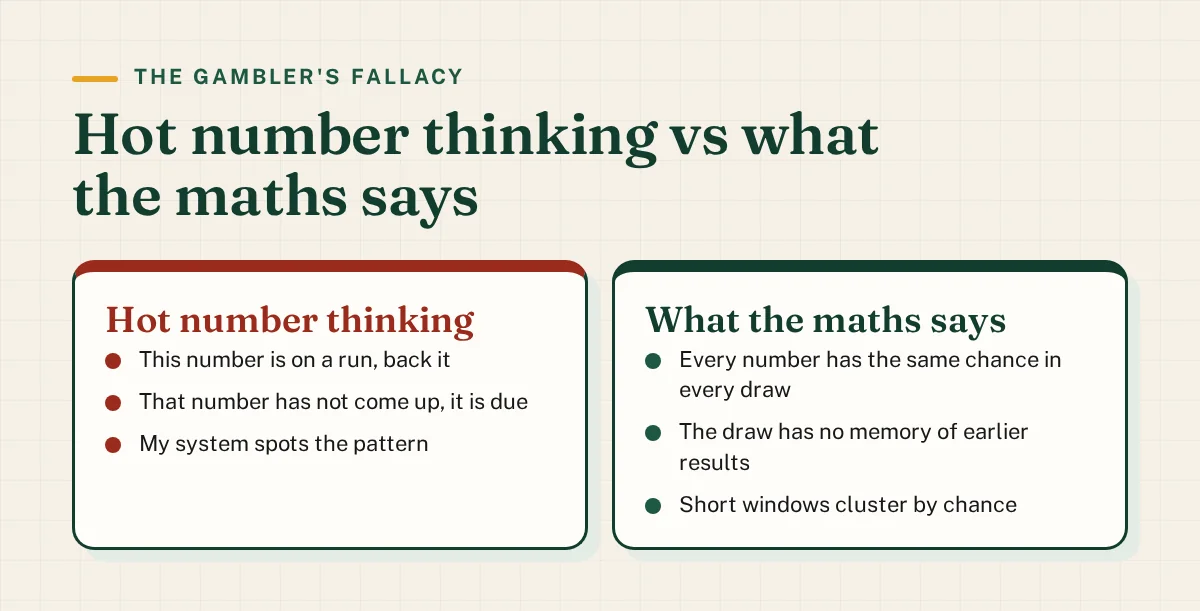
A random draw has no memory. The draw does not know that 23 came up three times this week, so 23 is no more and no less likely next time. Believing otherwise is the gambler's fallacy, and it cuts both ways.
What the counts can tell you
- Which numbers were drawn, and how often, in a past window.
- That small samples cluster by chance.
- Whether an old line would have matched a past draw.
What they cannot tell you
- Which numbers will come up in the next draw.
- Whether a number is "due" or "on a run".
- Any way to improve the odds of a line.
What a fair count looks like over many draws
If every number from 1 to 49 has the same chance, each should appear in about six out of every 49 draws, because six main numbers come out each time. Over 49 draws, that is an average of six appearances per number. In practice some numbers will appear three or four times and others nine or ten, purely by chance, and the gap between them only narrows, in proportion, as the window grows to hundreds or thousands of draws.
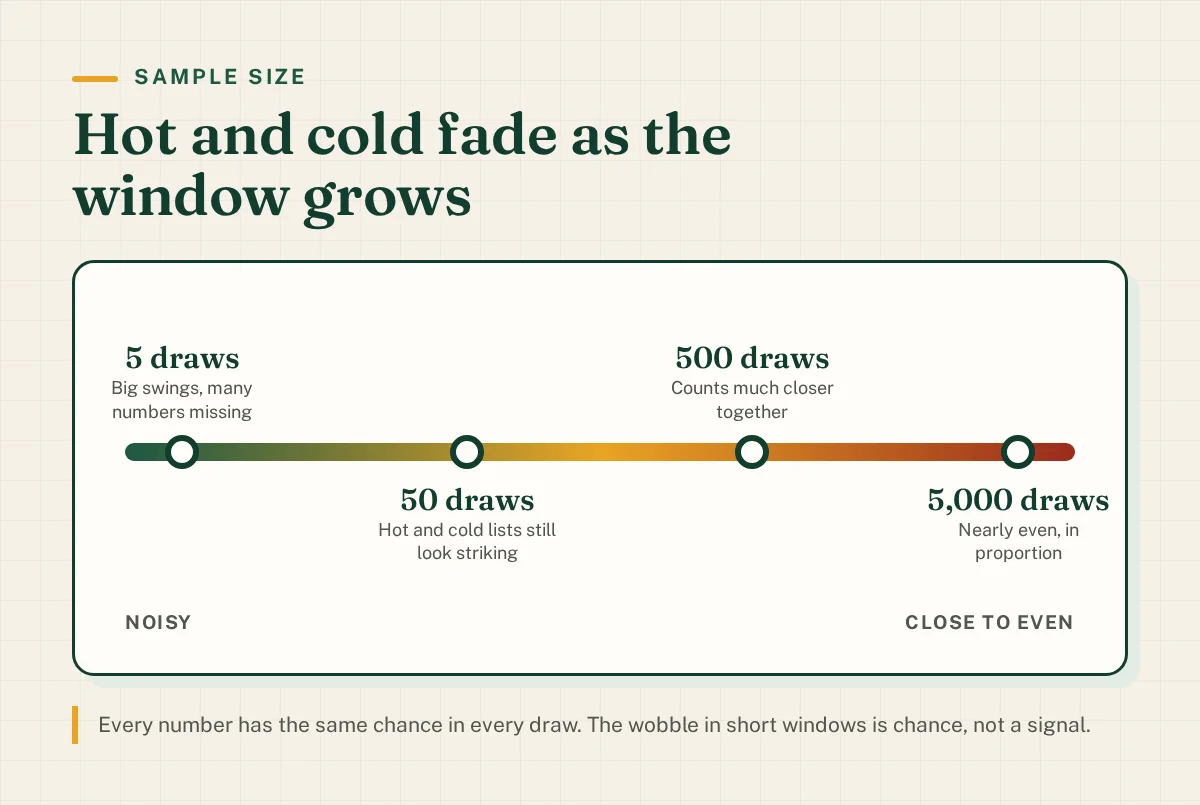
So a number that has appeared ten times in 49 draws is not "hot" in any useful sense. It is one end of the normal spread. Next month a different number will sit there, and the list sellers will have a new story to tell.
How to use these counts sensibly
There are honest reasons to look at frequency counts. They are interesting, they show what randomness really looks like, and they help you check whether a "hot list" someone is selling even matches the published results. Treat them as a description of the past, never as a basis for spending more or betting more often.
Lunchtime and Teatime statistics are separate
Lunchtime and Teatime are independent draws, which is why this page counts them separately. A number that is hot at Lunchtime tells you nothing about Teatime five hours later, and combining the two only makes a bigger window of the same randomness. The same goes for the seventh ball: "Booster ball predictions for today" are counts of past seventh balls, nothing more.
"100% predictions", Facebook groups and paid tips
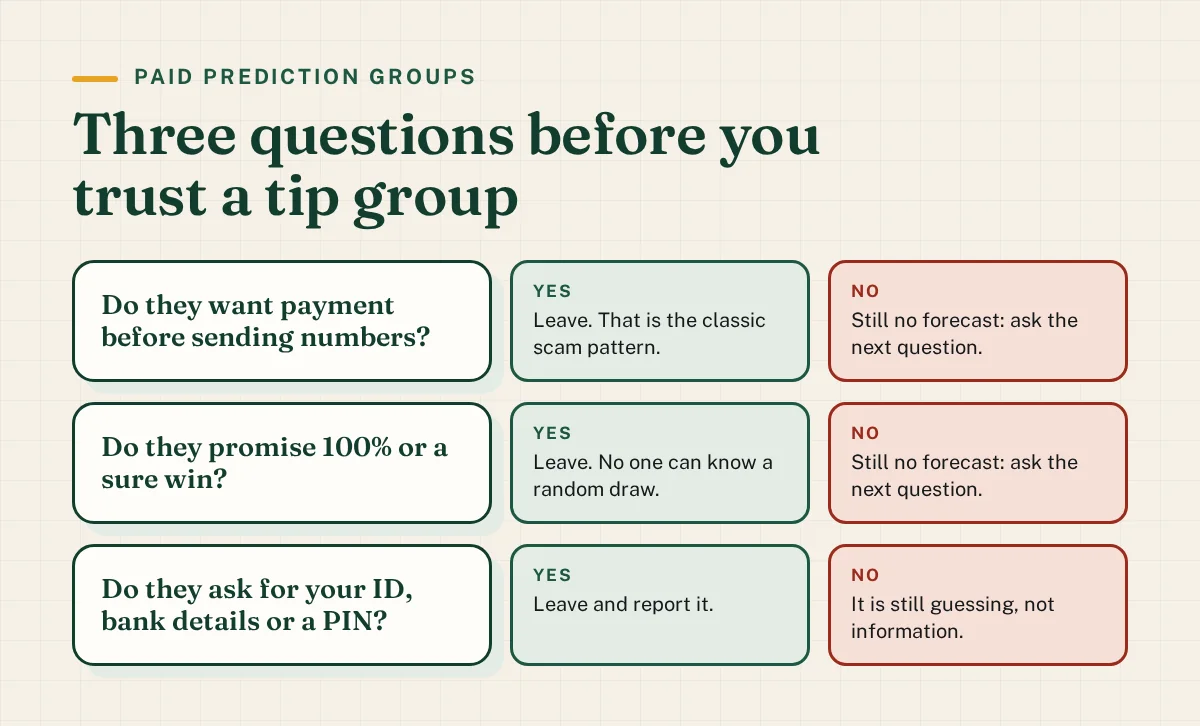
Social media groups and websites that sell the "best prediction" or claim 100% accuracy deserve suspicion. If anyone could forecast a random draw, they would not sell the answer for a few rand. Common warning signs:
Report misleading gambling adverts to the National Gambling Board at [email protected].
A note on betting on UK49s numbers
UK49s is drawn abroad. In South Africa, numbers on the draw are offered by some bookmakers as fixed-odds bets on the outcome, not as a lottery ticket. The Lotteries Act, section 57(2)(g), makes betting on the outcome of any lottery an offence unless another law authorises it, and whether provincial bookmaker licences count as that authorisation is contested. This site publishes results and statistics only, and nothing here is a suggestion to bet.
This information is for adults aged 18 and over. If chasing numbers is costing more time or money than you planned, the responsible gambling page lists confidential help. For how the draws themselves work, see the UK49s results page.
Questions and answers
Are UK49s predictions accurate?
No prediction can be accurate for a random draw. What sites call predictions are counts of how often numbers appeared in past draws, and those counts say nothing about the next one.
What are hot and cold numbers in UK49s?
Hot numbers appeared most often in a chosen window of past draws; cold numbers appeared least or not at all. Change the window and the lists change, which shows how much of them is chance.
Is a number that has not come up for a long time due?
No. Believing a number is due is the gambler's fallacy. The draw has no memory, so a long gap does not make a number more likely.
Are Lunchtime and Teatime statistics connected?
No. They are independent draws, so a number that is hot at Lunchtime tells you nothing about Teatime, and the reverse.
Should I pay for UK49s prediction tips?
No. Nobody can forecast a random draw. Paid tip groups that ask for vouchers, airtime or banking details first are a common way to take money from people.
What about Booster ball predictions?
They are counts of past seventh balls and nothing more. The seventh ball is as random as the main six.
Where do the numbers on this page come from?
From the same results feed as our Lunchtime and Teatime results pages, which is filled from 49's, the official publisher. The counts update when new draws arrive.